Who Will You Be? Echoes of Eureka Tells a Forgotten Story

A powerful choral opera brings a forgotten chapter of history to life and asks audience members to reflect on their role in shaping the future.
History can repeat itself—unless people choose to remember it. Echoes of Eureka, a choral opera by Eric Tuan, tells the story of the expulsion of Chinese residents from Eureka, California—a chapter of history that is often overlooked, yet far from irrelevant. Through music and storytelling, the opera becomes more than a retelling; it is a warning, urging audiences to confront the past so its injustices are not repeated. As singers take the stage on Saturday, March 21, 2026, the opera poses a profound question: “Who will you be?”
For Tony Ouyang, a parent and board member of the Piedmont East Bay Children’s Choir, the opera’s impact lies in its ability to make difficult conversations far more accessible. In a region as diverse as the Bay Area, he explains, it can be assumed that racism and discrimination are problems of the past. However, Echoes of Eurekachallenges this narrative. “This opera is a way to touch on the topic of racism and discrimination, not in a direct way, but through music and the arts,” Ouyang says. Approaching these themes through artistry gives the audience a more interactive and in-depth experience, while encouraging the audience to engage emotionally rather than defensively.
The opera is powerful because of the emotional connection it creates. The connection is not just for the audience, but for performers as well. Josie Renaud, a soprano in the choir, describes the experience of singing in Echoes of Eureka as transformative. “I feel empowered. Like I’ve brought to life a story that many people don’t know,” she shares. The choir’s harmonies fill the space with a resonance, allowing the story to reach every corner of the space and drawing both performers and audience into the emotion it exhibits. For her, the opera is not just a performance, but a reflection of real, ongoing struggles and injustices that plague society to this day. Though the story is rooted in history, she emphasizes that its message is still urgent today. “It is a story that repeats countless times right now,” Renaud explains, pointing to the continuous reality of oppression faced by marginalized communities.
Audience and performers alike find their own personal histories reflected in the themes of the opera. Ouyang recalls growing up as one of the few Chinese Americans in Arizona, navigating the ideologies of assimilation as well as cultural identity. “I was constantly pulled between the two of wanting to be ‘American’ versus my home environment,” he says, describing pressure to fit in as well as traditional values.
Similarly, Renaud connects to the opera through her family’s immigration story, noting that
even when discrimination isn’t always visible, the effects are deeply felt. “Even if you don’t see it, this opera is very real,” she expresses.
Murielle Vance, an alto in the choir, sees Echoes of Eureka as a way to give voice to those who often go unheard. When asked why she performs the opera, Vance says, “I sing for all the people wrongfully being deported because this is the way I can give them a voice they may not have.” For Vance, the act of performing is inseparable from advocacy. The emotions she experiences while singing—anger, empowerment, and a sense of community—mirror the opera’s central themes and amplify its message.
The core of Echoes of Eureka is about voice: who has it, who is denied it, and what happens when it is finally heard. Ouyang emphasizes the importance of speaking out, even when it feels difficult or nearly impossible. “When you feel like your story and your voice is not being heard, it’s always important to voice it,” he says. “Because people will hear.” The opera itself becomes an embodiment of that idea: a group of singers that come together and tell a story that history once tried to silence.
This idea is perhaps most prominent in the opera’s most emotional moments. Renaud points to one of the final movements as especially powerful, noting that audience members are often left in tears. These reactions aren’t coincidental, but they are a result of the opera’s ability to humanize history. Rather than presenting events distantly or abstractly, Echoes of Eureka personalizes them. Audience members do not just learn from the past; they feel it.
Vance highlights another key message of the opera: the importance of solidarity. With solidarity being both a title of a movement as well as a large message, an even greater emphasis is put on this word. She described the movement as powerful because it “shows kindness in a world of hate.” In a time when division dominates politics, discourse, and discussion, this emphasizes empathy, and the connection feels especially relevant. The opera does not just depict injustice, but it also offers an insight into what it means to stand together against it.
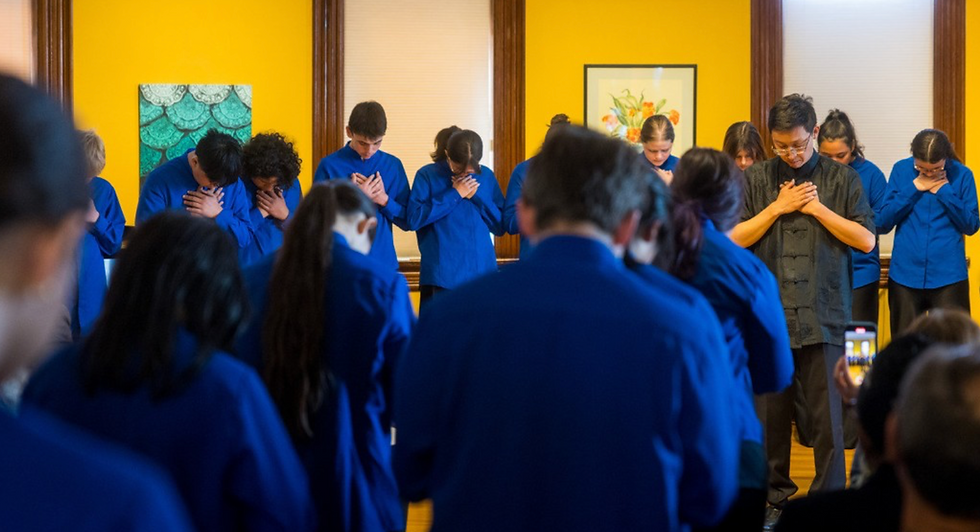
Despite the historical focus, Echoes of Eureka ultimately looks forward. By drawing parallels between the past and the present, audience members are challenged to reflect on their roles in shaping the future. Renaud hopes viewers will leave with a new sense of awareness and responsibility. “If we all come together, we can stop it,” she says, emphasizing that it takes just one small voice to gather a crowd and showing that change begins through a collective effort.
Echoes of Eureka reminds us that history’s lessons endure only when we choose to remember them. It reminds the audience that history is not just something to study in a history book, but something to feel, remember, and learn from. The music bridges the gap between past and present, transforming a specific historical event into a call for action, awareness, and empathy. And ultimately, it returns to the question at its core. History has a chance to repeat itself—unless people choose to remember it. As the final chords of Echoes of Eureka strike, the message lingers, echoing beyond the stage and into the lives of those who have witnessed this mesmerizing performance. The past has been told, and voices have been heard. Once the singers present the story, fate lasts in the audience’s hands as the question remains: “Who will you be?”
United We Sing!
Witness history come alive and join the conversation—tickets for the March 21 concert are available here: https://event.auctria.com/67bf49e4-8491-434e-b0ea-719966d1c947/
For future performances and updates, visit: https://www.piedmontchoirs.org/event-calendar
Here is a clip of Echoes of Eureka: https://youtu.be/AB7GIXHAGWc
Finally, a special thanks to Sophi Ouyang for helping with this article, as well as gathering outstanding and thought-provoking interviews.
Comments